

USC’s Oregon Loss Revives Lincoln Riley’s Biggest Question

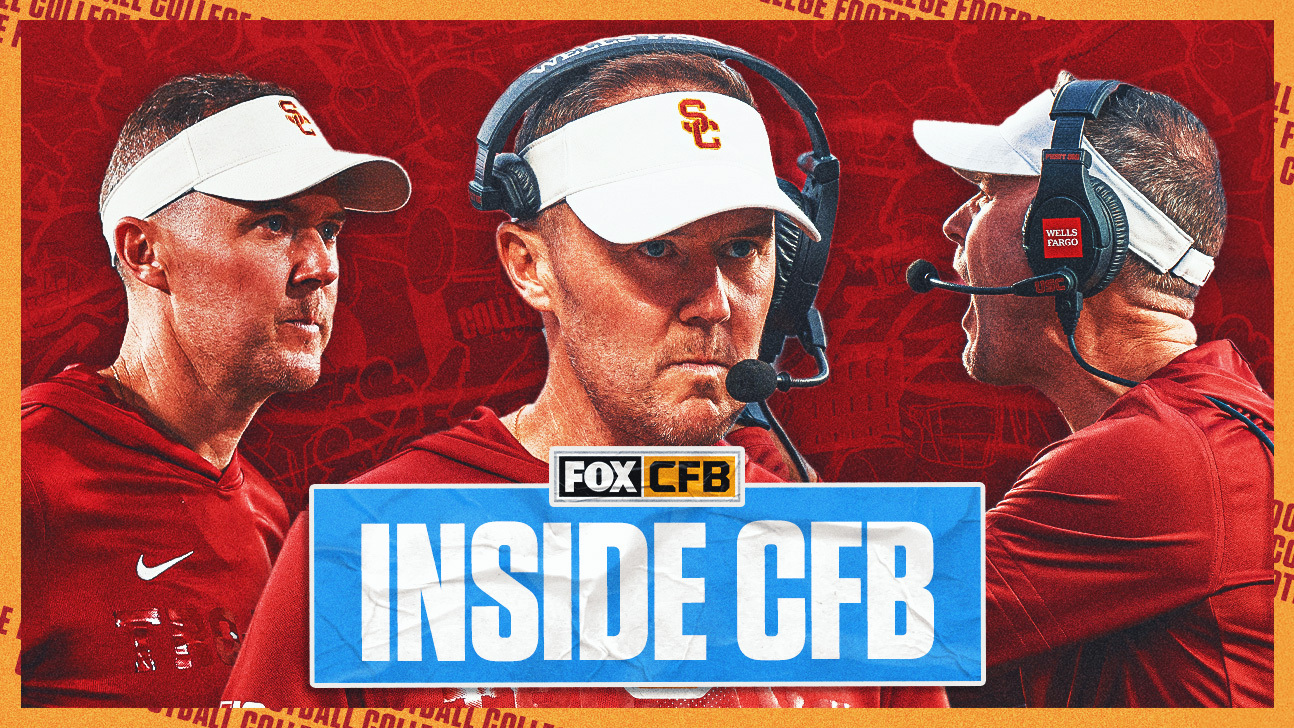
USC’s 41-27 loss to Oregon at the Los Angeles Memorial Coliseum felt familiar in the most damaging way. It did not suggest the Trojans are untalented or poorly coached across the board. Instead, it reinforced a harsher conclusion: USC looks like a classic Lincoln Riley team, brilliant on offense, vulnerable on defense, and still short of the balance required to beat true title contenders.
That distinction matters because Riley was hired to do more than produce highlights and Heisman-caliber quarterback play. USC brought him to Los Angeles to restore championship credibility. The expectation was not simply relevance, but contention. Years into his tenure, the larger question remains unchanged: can one of Riley’s teams win the biggest games when the opponent is equally explosive and far more complete?
Against Oregon, the answer again looked discouraging. This was the kind of measuring-stick game that should have clarified whether USC had evolved. Instead, the second half turned into another example of a Riley team failing to control the terms of a heavyweight matchup. Even with Oregon leaning on a backup quarterback after Dante Moore exited following a violent hit that later resulted in a concussion diagnosis, USC could not steady the game or impose itself defensively.
The numbers only deepen the concern. Last season, USC allowed 23.0 points and 350.8 yards per game, both the best marks of the Riley era. That represented progress, but not dominance. This season, the Trojans have already allowed at least 26 points in four of five games, while opponents are averaging 354.8 yards. Improvement is one thing; championship readiness is another.
That gap has defined Riley’s head-coaching career. His offenses are among the sport’s most creative and productive, and his reputation as a quarterback developer is unmatched. But national title teams typically play complementary football, not survival football. They do not ask their defense merely to be one point better than the opponent after every offensive burst. They demand stops, field position, and control. USC still does not consistently show those traits.
The legacy issue Riley still cannot escape
Part of why this conversation follows Riley so closely is that his Oklahoma exit still shadows his public image. In his final days there, he spoke emotionally about players, sacrifice, and the pain of falling short. Less than a day later, he left for USC. For many Oklahoma supporters and former players, the issue was not only that he departed, but how abruptly it happened after such pointed public remarks.
That history matters because it shaped the expectations he carried to USC. Riley was supposed to take a blue-blood program with vast resources and turn elite offense into complete championship football. Instead, the same structural weakness continues to follow him. Even with veteran defensive minds around the program, the Trojans still look too dependent on scoring volume and too fragile when games become physically demanding.
None of this means USC’s season is over. The expanded College Football Playoff keeps the Trojans alive, and they still have enough talent to reach the Big Ten title conversation. But the path ahead runs through opponents such as Ohio State, Penn State, Wisconsin, Indiana, and UCLA, and those games will demand more than schematic fireworks.
The real problem for USC is not one loss. It is the feeling that came with it. Oregon did not expose a temporary flaw; it revived a long-running concern. Until Riley fields a team that can win with balance, discipline, and defensive authority, the doubt will remain that his programs are exciting, dangerous, and ultimately not built to win the national title.
Install in seconds and keep earning from your phone.
Frequently Asked Questions
What's Your Reaction?
 Like
0
Like
0
 Dislike
1
Dislike
1
 Love
0
Love
0
 Funny
0
Funny
0
 Wow
0
Wow
0
 Sad
0
Sad
0
 Angry
1
Angry
1









Comments (0)