

Russia May Be Hiding Tiny Drone Repeaters in Kyiv

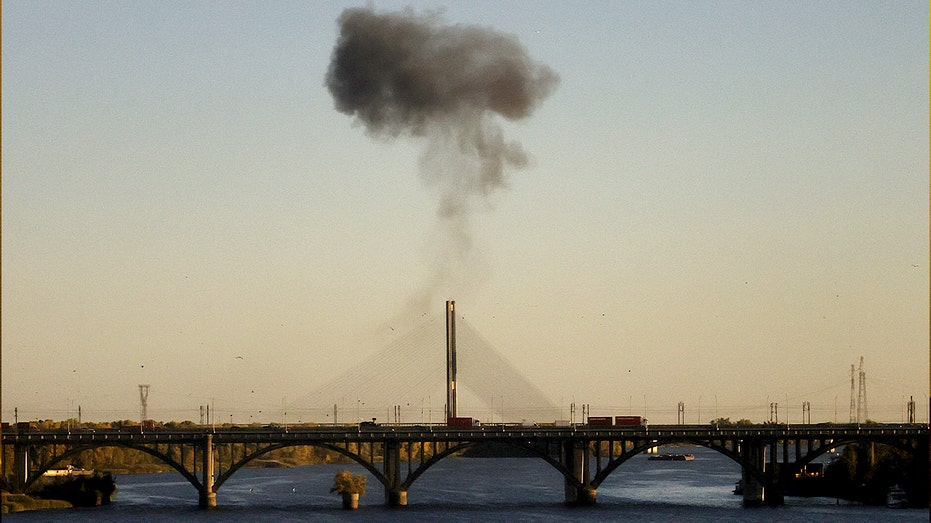
Russia may be placing small concealed signal repeaters inside Ukrainian cities to help long-range drones bypass defenses and hit targets more accurately, according to warnings from weapons experts and Ukrainian officials. The concern centers on compact ground devices that can extend communications, strengthen control links, and make drone attacks more resistant to electronic interference.
The Kyiv Post first reported the possible use of these devices. Draganfly CEO and co-founder Cameron Chell told Fox News Digital that the repeaters appear to be part of a growing mesh network, in which drones and ground nodes pass encrypted signals through multiple connections. That setup can make Russian drones, including swarms, much harder for Ukraine to disrupt with standard jamming.
Chell said Russia has increasingly embraced battlefield innovation. In his view, Moscow is shifting not only its technology and tactics, but also its broader military mindset. He argued that this evolution is showing up in the way Russian forces are building more resilient communications systems around unmanned aircraft.
Mesh networking, he explained, allows a drone to maintain contact through several possible paths instead of relying on a single vulnerable link. That means defenders may need to break many connections at once to stop one aircraft. Chell said the added bandwidth and resilience can also support real-time targeting decisions, allowing operators to adjust a strike at the last moment with greater precision.
Those warnings have emerged alongside heightened tension around Kyiv. On Oct. 3, Moscow urged foreign nationals and embassy staff to leave the Ukrainian capital immediately, citing what it called “mortal danger” and warning of further “massive retaliatory strikes.”
Ukrainian Air Force spokesperson Yurii Ihnat said on Sept. 29 that Russian forces are already using mesh networking principles in their drone fleet while improving onboard cameras. According to remarks cited by Ukrainska Pravda, he said the enemy is using higher-quality materials and better camera resolution, giving operators a clearer view of conditions on the ground and expanding the range of possible targets. He also described the networking shift as dangerous.
Chell said the logic is straightforward: if Russia can connect one drone to multiple nodes and other devices in the area, Ukraine could be forced to sever dozens or even hundreds of simultaneous links to bring it down. That would reduce the effectiveness of traditional counter-drone measures focused on breaking a single communications path.
Why the devices are hard to stop
On Oct. 3, Serhii Beskrestnov, a defense technology adviser to the Ukrainian presidency, warned that Russian forces may have hidden small signal boosters, or ground repeaters, inside Kyiv itself. He said such devices are difficult to locate, but must be found because electronic warfare shielding will remain less effective as long as they are in place.
According to Chell, the repeaters are roughly the size of a large lunchbox, easy to conceal, and difficult to detect because they do not need to stay switched on continuously. He said moving only a few into a city the size of Kyiv could have a major effect.
Technical analysts have also pointed to a Sept. 4 strike on the Security Service of Ukraine headquarters on Volodymyrska Street in central Kyiv as a possible early sign of this tactic. Reported tracking data showed no relay drones airborne during that attack, raising concern that hidden ground-based repeaters may have maintained the communications link.
President Volodymyr Zelenskyy said on Sept. 28 that Ukraine intercepts about 70% of conventional Russian drones during mass attacks, but only 57% of newer, faster jet-powered UAVs. He added, according to Ukrainska Pravda, that Russia plans to spend US$12 billion next year on jet-powered drones and loitering munitions alone.
For Chell, that points to a larger shift in warfare. He argued that the drone itself is becoming only one part of the threat, while the network guiding it is increasingly central. In his words, the network is becoming the weapon, and the drone is the tool that carries out the final strike.

Works on Android, iPhone, Windows and Mac. No Play Store, installs in 2 seconds.
Frequently Asked Questions
What's Your Reaction?
 Like
0
Like
0
 Dislike
0
Dislike
0
 Love
0
Love
0
 Funny
0
Funny
0
 Wow
0
Wow
0
 Sad
0
Sad
0
 Angry
0
Angry
0














Comments (0)