

How the 2026 Brewers Expose October Baseball’s Real Truth

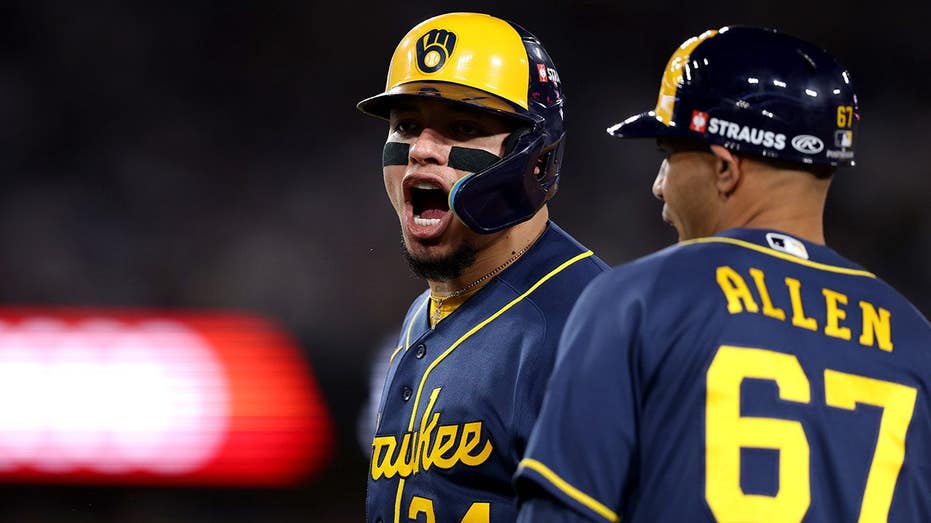
Every October, baseball circles return to the same question: what is the formula for winning in the postseason? Building a playoff team is easier to explain. Draft well, develop talent, add depth, and use free agency or trades to patch weaknesses. Bigger payrolls can help, but they do not guarantee anything, as several high-spending clubs have learned.
The harder question is what happens once a team gets in. On that front, the 2026 Milwaukee Brewers are offering a useful reminder, even if it is not the one many people want to hear. Entering Thursday afternoon, Milwaukee holds a 3-0 NLCS lead over the Dodgers despite carrying the sport’s 19th-ranked payroll and despite years of moving on from star talent such as Corbin Burnes, Devin Williams, and Freddy Peralta.
Their roster construction hardly screamed powerhouse. Milwaukee’s offseason additions included Gary Sanchez, Angel Zerpa, Jake Woodford, and a trade with Boston that brought in David Hamilton, Shane Drohan, and Kyle Harrison. During the season, they added Dustin May, JoJo Romero, and Antonio Senzatela, while Tarik Skubal landed with Los Angeles. On paper, that does not sound like the profile of a team on the verge of the World Series.
Yet the Brewers have beaten the Dodgers three straight times, taking Game 1 by a 2-1 score against Skubal, rallying for a 7-4 win in Game 2 after chasing Yoshinobu Yamamoto, and pulling away late for a 6-2 win in Game 3.
The numbers do not support a neat playoff blueprint
A popular explanation has been that Milwaukee is thriving because it puts the ball in play and avoids strikeouts. The actual numbers say otherwise. In the first three games of the series, the Brewers struck out 35 times, nearly 12 per game. The Dodgers struck out 25 times, just over eight per game.
Milwaukee also has not won because it is making dramatically better contact. Through three games, Los Angeles produced 29 hard-hit balls of at least 95 mph, compared with 21 for Milwaukee. The Dodgers turned those into 12 hits and no home runs. The Brewers got 11 hits and five home runs from their hard contact.
Even on softer contact, the outcomes have swung heavily toward Milwaukee. The Dodgers put 40 sub-95 mph balls in play and got only three hits, a .075 average. The Brewers put 42 such balls in play and collected 16 hits, good for a .381 average. That is not a repeatable strategy as much as it is a snapshot of how wildly results can swing in a short series.
October is about margins, timing, and variance
This is the real lesson from Milwaukee’s run. There is no hidden postseason formula that guarantees a pennant. There is only the effort to build a good enough team to reach October and then hope performance peaks at the right time.
FanGraphs analyst Dan Szymborski’s ZiPS model gave the Dodgers a 58% chance to win this series before it began. That is meaningful, but it also means Milwaukee still had a 42% chance. A payroll gap of roughly $250 million did not create certainty; it created a modest edge.
The Brewers have also received elite bullpen work, allowing just two runs in roughly 32 postseason innings, and they have benefited from favorable batted-ball results. Their batting average on balls in play in this NLCS sits at .393, while the Dodgers are at .221. Milwaukee’s strikeout rate is 31.3%; Los Angeles is at 23.4%. The Brewers have simply done more damage with their opportunities, especially via a 5-0 home run edge.
None of this diminishes Milwaukee’s quality. They developed Brice Turang, Jackson Chourio, and Garrett Mitchell, turned Jake Bauers into one of baseball’s best hitters, and have likely NL Cy Young winner Misiorowski leading the way. But this series is still a reminder that in baseball, talent creates probability, not certainty. If you want to know how to win in October, the answer is simple and uncomfortable: build a strong team, get in, and understand that luck is not a side effect of postseason baseball. It is part of the blueprint.
Install in seconds and keep earning from your phone.
Frequently Asked Questions
What's Your Reaction?
 Like
0
Like
0
 Dislike
0
Dislike
0
 Love
0
Love
0
 Funny
0
Funny
0
 Wow
0
Wow
0
 Sad
0
Sad
0
 Angry
0
Angry
0








Comments (0)