

Ex-CIA Officer Warns Russia Bio-Leak Secrecy Echoes Chernobyl

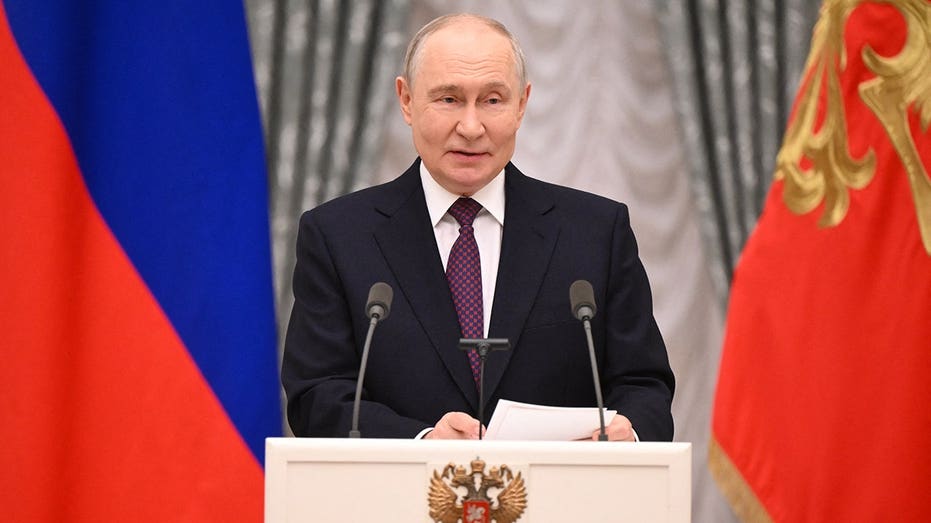
Fears surrounding a possible pneumonic plague outbreak after the death of an employee at a Siberian plague research institute have added to wider scrutiny of how Russia handles sensitive public health incidents. While Russian authorities say there is no evidence linking the woman’s illness to pathogens connected to her work, the limited transparency has fueled concern among outside observers already wary of Moscow’s record on secrecy.
The employee was identified as 28-year-old Darya Shipilova, who worked at the Irkutsk Anti-Plague Research Institute of Siberia and the Far East. Russian officials said she died after being diagnosed with pneumonia of an “unknown” origin. The country’s health authorities also said testing found no micro-organisms associated with her professional duties in samples taken from the patient.
On Monday, Secretary of State Marco Rubio said the United States was “watching and monitoring” the situation closely. Anna Popova, who heads Russia’s Federal Service for the Oversight of Consumer Protection and Welfare, known as Rospotrebnadzor, traveled to the research institute as the case drew international attention.
Why experts say the political impact matters
Retired CIA officer Dan Hoffman said a single lab death is not, by itself, a direct threat to President Vladimir Putin’s rule. But he argued that incidents seen as hidden or poorly explained can deepen public frustration at a time when the Kremlin is already under pressure from a weak economy and a war in Ukraine that has cost Russia an estimated hundreds of thousands of lives.
Hoffman told Fox News Digital that the larger issue is whether events like this contribute to a growing sense among Russians that the system is failing them. In his view, such episodes do not topple governments on their own, but they can become part of a broader pattern of mistrust when combined with military setbacks and economic strain.
He drew a direct comparison to the Soviet Union, arguing that Chernobyl was not the sole reason for its collapse, but one element in a wider accumulation of failures. He also pointed to the Soviet-Afghan War as another historical example, saying today’s war in Ukraine could play a similar role in shaping how Russians judge the leadership in Moscow.
Secrecy and the Chernobyl parallel
Hoffman said Russia’s information controls make it difficult to assess what is happening behind the scenes. He argued that public statements from the Kremlin or state agencies should be viewed cautiously, describing them as part of an effort to manage domestic perception rather than fully explain reality.
That skepticism is rooted in Soviet and Russian precedent. The Soviet Union tightly controlled reporting on its invasion of Afghanistan amid international condemnation. It also imposed a sweeping media blackout after the Chernobyl nuclear reactor exploded on April 26, 1986, suppressing information at home and abroad in the early stages of the disaster.
According to Hoffman, the same governing logic still applies: authoritarian systems seek to control damaging narratives, especially when national security, scientific research or state prestige are involved. He said that leaves foreign governments and analysts dependent on intelligence rather than official disclosures to understand what may actually be unfolding.
Hoffman also compared Russia’s approach to that of China, another close partner of Moscow. He argued that Beijing likewise tightly manages what information reaches the outside world, citing the limited usefulness of early information released during the COVID pandemic as an example of how authoritarian governments handle politically sensitive health crises.
For now, Russian authorities maintain that Shipilova’s death has not been linked to any work-related pathogen. Even so, the case has revived a familiar question: whether the greater danger lies not only in a possible biological incident, but in the secrecy that can surround it.

Works on Android, iPhone, Windows and Mac. No Play Store, installs in 2 seconds.
Frequently Asked Questions
What's Your Reaction?
 Like
0
Like
0
 Dislike
0
Dislike
0
 Love
0
Love
0
 Funny
0
Funny
0
 Wow
0
Wow
0
 Sad
0
Sad
0
 Angry
0
Angry
0














Comments (0)