

Maine Senate Debate Erupts After Protester Interrupts Collins

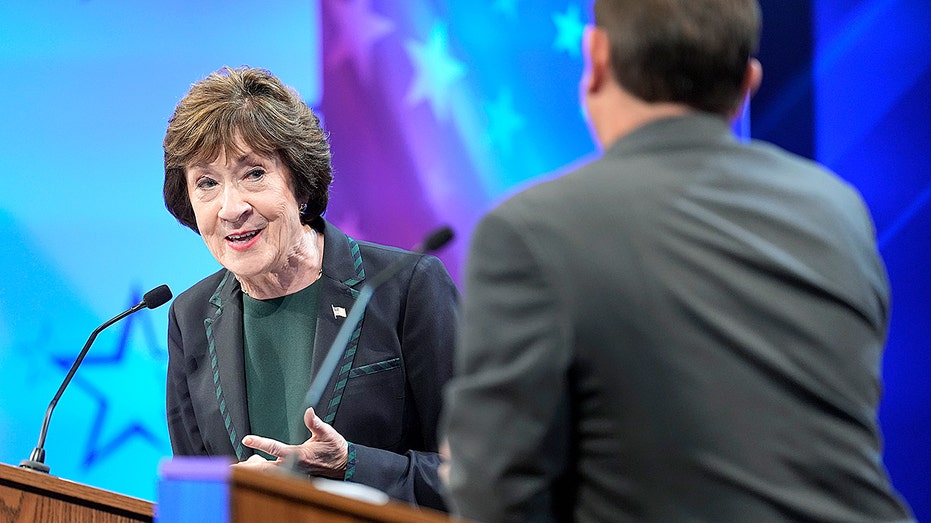
A protester’s outburst jolted the final debate between Republican Sen. Susan Collins and Democratic challenger Troy Jackson, setting off one of the night’s sharpest exchanges in a closely watched Maine Senate race. The interruption came as Collins was speaking during the hour-long event, the fourth debate between the candidates in a two-week span and the first held before a live audience.
The demonstrator shouted, “I’m terrified. AI data centers are destroying our climate. They are poisoning our water,” before adding, “30 years for what?” in an apparent reference to Collins’ long tenure in the Senate. As security escorted the protester from the hall, Collins suggested the man backed her opponent.
“So, this is obviously one of Troy’s supporters,” Collins said. Jackson immediately pushed back, snapping, “Oh, shut up, I did not — I didn’t, I don’t even know who that kid.” The exchange underscored the tense tone of a debate in which both candidates repeatedly clashed over policy and character.
The contest is one of Democrats’ best opportunities to flip a Senate seat as they try to reclaim the chamber’s majority in the midterm elections. Public polling has indicated a race within the margin of error between Collins and Jackson, a former logger and former president of the Maine Senate. Fox News Power Rankings have rated the race a toss-up, and the same assessment has been made by the Cook Political Report, Inside Elections and Sabato’s Crystal Ball.
A race defined by contrasts
Later in the debate, another pointed moment came when the candidates questioned each other directly. Jackson, who like Collins is from Aroostook County in northern Maine, asked, “What I’m curious about — is it just me that you look down on, or is it working-class people overall?”
Collins rejected the accusation. “Troy, I do not look down on you or on anyone,” she responded. “I grew up in Caribou. My first job was picking potatoes.”
Jackson has tried throughout the campaign to tie Collins to President Donald Trump, whose approval ratings in Maine and nationally have declined. During the debate, he argued, “The reality is 100% of the time when Donald Trump needs her, Susan Collins is going to be there.” Collins answered by stressing her independence, calling it a “major difference between Troy and me” and adding, “I vote very independently. ... I am the most bipartisan member of the Senate.” She also argued that Maine does not need “more people who are going to vote a straight party line.”
The candidates spent much of the debate sparring over the Iran war, immigration, fuel and electricity costs, budget deficits, Supreme Court reform, dark money in politics, an assault weapons ban and climate change. Collins again highlighted how her seniority in the Senate has helped her secure federal funding for Maine, while Jackson presented himself as an outsider who understands the frustrations of working-class voters.
Why the race matters
Jackson became the Democratic nominee at a special convention in late July after primary winner Graham Platner ended his campaign following allegations that he raped a woman he had previously dated. Platner denied the allegations but withdrew from the race. Earlier in the year, Jackson had also run unsuccessfully for the Democratic gubernatorial nomination and had campaigned alongside Platner during the Senate primary.
Collins is the only Republican senator seeking re-election in a state Trump lost in the 2024 election. Even so, she has a history of surviving difficult Democratic challenges. Six years ago, she trailed Democrat Sara Gideon, then the speaker of the Maine House, but ultimately won re-election by nearly nine points while Joe Biden carried the state by a similar margin. That history, combined with the race’s toss-up status, helps explain why every debate moment is drawing such close attention.
Install in seconds and keep earning from your phone.
Frequently Asked Questions
What's Your Reaction?
 Like
0
Like
0
 Dislike
0
Dislike
0
 Love
0
Love
0
 Funny
0
Funny
0
 Wow
0
Wow
0
 Sad
0
Sad
0
 Angry
0
Angry
0









Comments (0)