

Lauren Sánchez Bezos’ White House Dress Sparks Debate

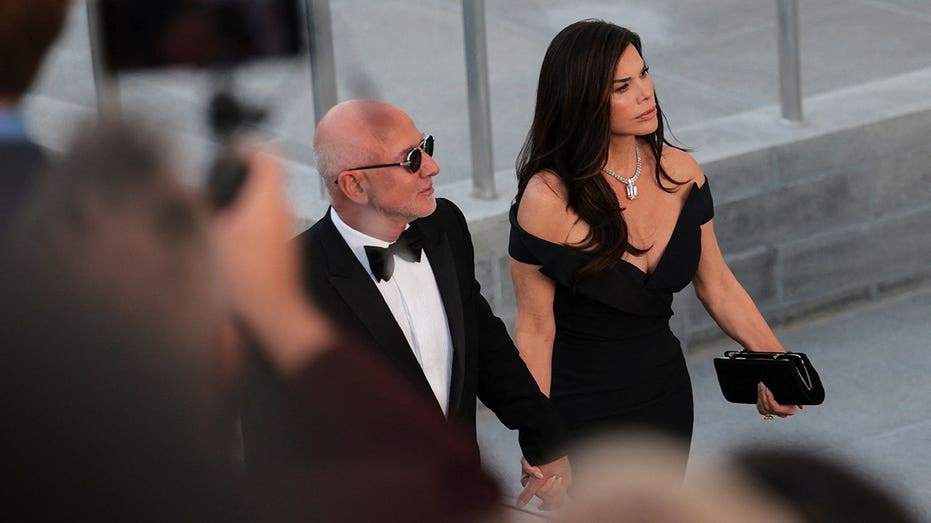
Lauren Sánchez Bezos set off a wave of online debate after appearing at a White House state dinner honoring Chinese President Xi Jinping in a plunging black gown. The look quickly became one of the most discussed moments of the evening, with critics and supporters offering sharply different views about what is appropriate at a formal political event. While some praised her confidence and modern glamour, others argued that the outfit clashed with the traditional expectations attached to a state occasion.
The reaction reflected a familiar pattern in the way high-profile women are discussed in public life. Fashion at major political gatherings is rarely treated as a simple style choice. Instead, it often becomes a proxy for larger conversations about protocol, status, gender, and the line between personal expression and institutional decorum. In this case, the dress itself became secondary to what people believed it represented.
Supporters of Sánchez Bezos described the gown as elegant, polished, and entirely in step with contemporary eveningwear. They noted that state dinners, while diplomatic in purpose, are still social events where fashion has long played a visible role. For that group, the criticism seemed less about the dress and more about the public tendency to scrutinize women’s appearances more intensely than men’s. A black gown, even one with a daring neckline, was seen by many as neither shocking nor unprecedented in elite formal settings.
Critics, however, framed the issue differently. They argued that a White House state dinner carries symbolic weight beyond that of a celebrity gala or awards show. Because such events are tied to diplomacy and national image, detractors said attendees should lean toward restraint rather than risk drawing attention away from the occasion itself. In their view, the plunging design crossed an unwritten boundary between fashionable and distracting.
Why the reaction became so intense
The strong response had as much to do with visibility as with style. Sánchez Bezos occupies a uniquely prominent place in media culture, where celebrity, wealth, and access to political spaces intersect. Any appearance she makes at a major event is likely to be dissected not only for aesthetics but also for what it suggests about influence and public identity. Social media amplified that dynamic, turning a single outfit into a broader cultural argument within hours.
The timing also mattered. In 2026, conversations around public image are shaped by a constant online feedback loop, where fashion moments are instantly clipped, reposted, and judged. Nuance tends to disappear in that environment. Rather than discussing fit, tailoring, or the conventions of black-tie dressing, much of the commentary hardened into opposing camps: one seeing empowerment, the other seeing poor judgment.
Fashion, protocol, and public expectations
State dinners have always blended diplomacy with spectacle. Guests are expected to project sophistication, but there is no universally accepted rulebook that settles every question of taste. That gray area is exactly why these moments generate debate. What one observer sees as chic and self-assured, another sees as out of step with the gravity of the setting.
Ultimately, the controversy says as much about public expectations as it does about the dress itself. Sánchez Bezos’ look became a flashpoint because it touched several sensitive themes at once: celebrity in political spaces, evolving standards of femininity, and the enduring belief that women at high-profile events must strike an almost impossible balance between standing out and not standing out too much. Whether people admired or disliked the gown, the intensity of the reaction confirmed one thing: fashion remains a powerful language at the intersection of culture and politics.
Install in seconds and keep earning from your phone.
Frequently Asked Questions
What's Your Reaction?
 Like
0
Like
0
 Dislike
0
Dislike
0
 Love
0
Love
0
 Funny
0
Funny
0
 Wow
0
Wow
0
 Sad
0
Sad
0
 Angry
0
Angry
0








Comments (0)