

Inside Israel’s Secret Nasrallah Strike and US Rift

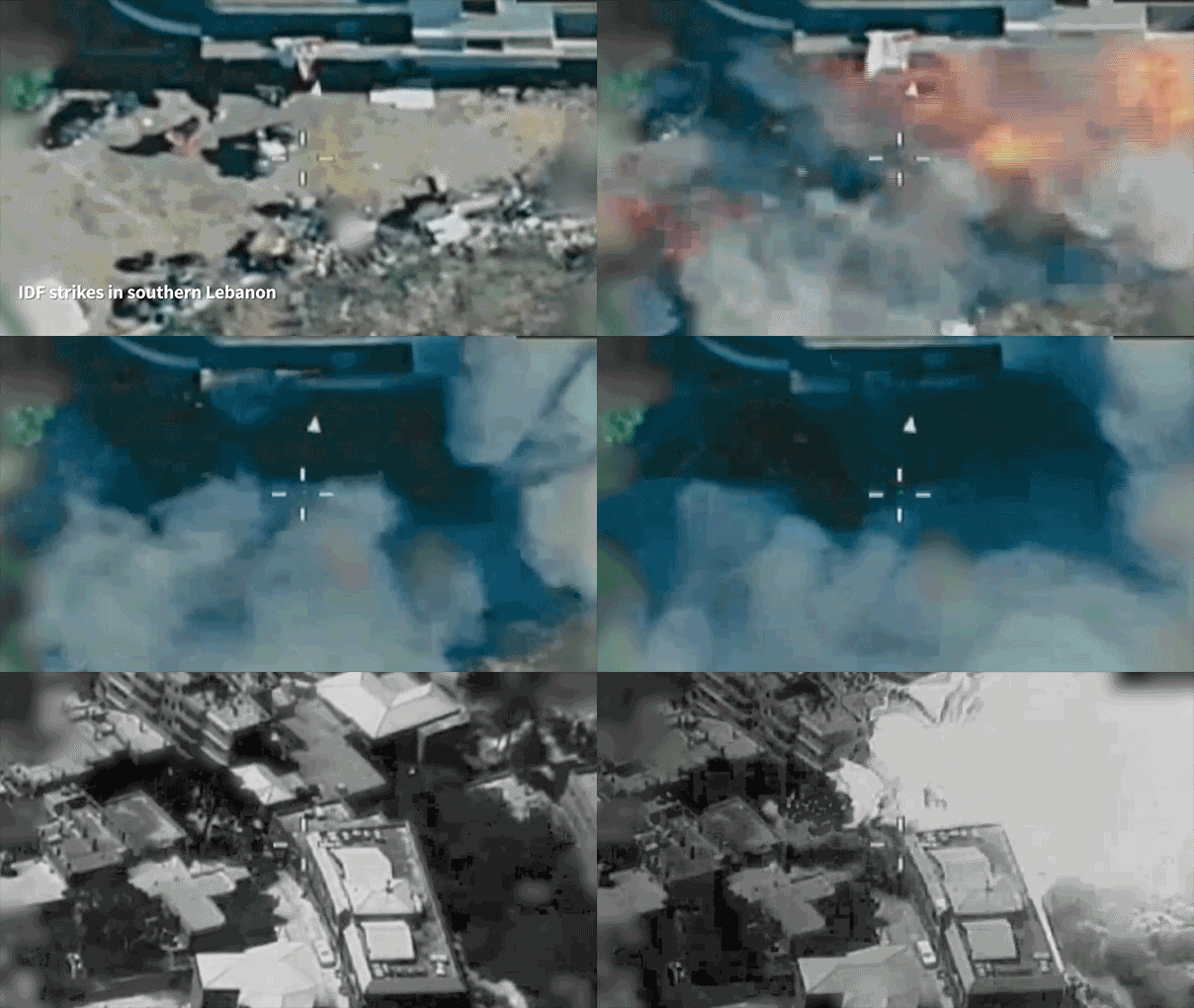
As Israel prepared to kill Hezbollah leader Hassan Nasrallah in September 2024, Prime Minister Benjamin Netanyahu and his top defense officials were divided over a crucial question: whether to alert the Biden administration before the operation. According to Wall Street Journal editorial writer Elliot Kaufman and another source familiar with the internal discussions, Netanyahu feared Washington might try to block the mission.
Kaufman, who co-authored In the War Room: The Inside Story of Israel's Fight Against Hamas and the Iranian Axis, said Netanyahu told senior officials the Americans would not support the plan. He also recalled Netanyahu warning that then-national security adviser Jake Sullivan would “jump out of his skin” if he learned what Israel was about to do.
At the time, then-Defense Minister Yoav Gallant and IDF Chief of Staff Herzi Halevi reportedly favored informing the United States. Their view was that Washington might back a strike on a Hezbollah leader tied to attacks that had killed U.S. service members. Netanyahu took the opposite position, reflecting a broader strategic split between Jerusalem and Washington as the Biden administration tried to prevent a wider regional war.
A strike that changed the northern front
When Israeli jets hit Hezbollah’s headquarters in Beirut on September 27, 2024, the Pentagon said it had received no advance notice. Gallant spoke with then-Defense Secretary Lloyd Austin only after the operation was already underway. The strike killed Nasrallah, who had led the Iranian-backed group for more than 30 years.
The killing marked a major turning point in Israel’s campaign against Hezbollah. The Lebanese group had opened a second front on October 8, 2023, one day after Hamas’ attack in southern Israel, and had repeatedly fired rockets and missiles at northern Israeli communities. Kaufman argued that Israel had waited nearly a year for U.S. diplomacy to stop the attacks, but saw no result. In his account, Israeli officials believed the situation in the north had become untenable and that military action was necessary.
Kaufman described the dispute as part of a deeper difference in war aims. He said the Biden administration’s priority was de-escalation, while Israel’s leadership was focused on defeating its enemies. That tension, he argued, surfaced repeatedly throughout the war.
Netanyahu, Gaza and the Oct. 7 legacy
The book also portrays Netanyahu as initially cautious about a full ground invasion of Gaza after the Hamas massacre of October 7, 2023. Kaufman said Netanyahu had just witnessed catastrophic failures by both the military and intelligence services, while senior American generals sent by President Biden warned that even fighting in Gaza City could end badly for Israel.
Netanyahu ultimately approved the ground operation on October 27, 2023, after weeks of internal argument. Kaufman said the prime minister later regained confidence in the military and intelligence establishment and became one of the strongest advocates for continuing the war.
On accountability for October 7, Kaufman was sharply critical. He said Netanyahu has not taken responsibility in their conversations, instead emphasizing that he was not awakened until 6:29 a.m. on the morning of the attack. That claim gained renewed attention after retired Maj. Gen. Avi Gil told Israel’s Channel 12 that Netanyahu’s chief of staff, Tzachi Braverman, sought to alter the official record of a call by changing the time from 6:40 a.m. to 6:29 a.m. Braverman admitted trying to change the recorded time but denied wrongdoing. Likud said the matter had previously been investigated and lacked substance, though prosecutors had not announced a decision to close the case.
Gil also said earlier hostage deals may have been missed for political reasons. Kaufman, while acknowledging such criticism inside Israel’s security establishment, argued that later operations against Hezbollah and Iran showed the war was not driven only by Netanyahu’s political survival.
The book further says Israel’s later military gains helped persuade President Donald Trump to authorize U.S. strikes on Iranian nuclear facilities during the 12-day war in June 2025. Kaufman said Israeli military chief Eyal Zamir told Vice President JD Vance that U.S. forces had a rare opportunity to hit Fordow, and credited Vance with helping secure final approval for Operation Midnight Hammer.
Install in seconds and keep earning from your phone.
Frequently Asked Questions
What's Your Reaction?
 Like
0
Like
0
 Dislike
0
Dislike
0
 Love
0
Love
0
 Funny
0
Funny
0
 Wow
0
Wow
0
 Sad
0
Sad
0
 Angry
0
Angry
0









Comments (0)