

Supreme Court Prayer Grotto Case Could Reshape Zoning Laws

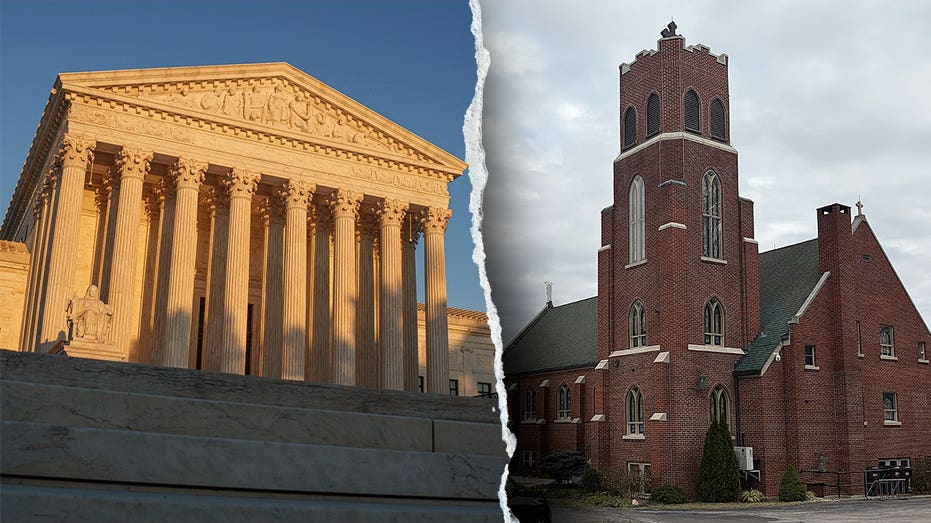
The Supreme Court has agreed to hear a Kentucky dispute over a Catholic church’s proposed prayer grotto, setting up a case that could clarify how far federal protections for religious land use extend. At issue is whether blocking a religious institution from building a religious structure on its own property amounts to a “substantial burden” on religious exercise under the Religious Land Use and Institutionalized Persons Act, or RLUIPA.
Ryan Gardner, senior counsel at First Liberty Institute, which represents the Missionaries of St. John the Baptist, said the case could carry consequences far beyond one project in Park Hills, Kentucky. He described it as a major religious-liberty dispute with the potential to affect zoning rules across the country. Gardner also said RLUIPA sits at the crossroads of two important legal principles: religious freedom and property rights.
The proposed project is a 16-by-39-foot grotto that court records say would include a shrine to the Virgin Mary, a plaza, a walking path and a retaining wall. Gardner has compared the roughly 600-square-foot footprint to the size of a swimming pool. The church sought approval in March 2021 for a conditional-use permit and variance to build the grotto behind its building in honor of the Virgin Mary’s apparition to Saint Bernadette in Lourdes, France.
The church building has been on the property for nearly a century, predating Park Hills’ zoning ordinance adopted in 1974. The property arrangement, however, is more complicated than a simple church-lot dispute. The grotto plan involved an adjacent parcel that was initially under a perpetual lease and would be transferred to the religious organization as a condition of approval.
Unlike many religious land-use fights, the church did not initially lose before local officials. The Park Hills Board of Adjustment approved the permit in April 2021. The challenge instead came from neighboring property owners Joel and Elizabeth Frederic, who objected and took the dispute to Kentucky state court.
A trial court sided with the church, but the Kentucky Court of Appeals reversed that outcome. The appellate court concluded the board had exceeded its authority in approving the project and also found no violation of federal religious land-use law. In December 2025, the Kentucky Supreme Court affirmed the RLUIPA ruling, leading the church to ask the U.S. Supreme Court to step in.
Why the case matters beyond Kentucky
Congress enacted RLUIPA in 2000 to protect religious institutions from certain government-imposed burdens on the use of their property. The Missionaries asked the justices to review two questions, but the Supreme Court agreed to hear only one: whether prohibiting a religious institution from building a religious structure on its own property constitutes a substantial burden under the law.
Gardner argues lower courts have developed different ways of applying that standard, leaving religious groups with uneven protections depending on where they are located. In their Supreme Court petition, the missionaries likewise argued that federal and state courts are divided on how to determine when a land-use restriction becomes a substantial burden.
The Frederics, in their opposition brief, disputed that description. They argued appellate courts generally look to similar considerations and that different outcomes often reflect different facts. They also contended that the Missionaries had not shown that other locations for the grotto were unavailable. An attorney for the Frederics did not immediately respond to Fox News Digital’s request for comment.
The case places two significant areas of law side by side: the right to religious exercise and the power of local governments to regulate property use. Gardner acknowledged that zoning serves a legitimate public function, but he argued that local land-use authority still must operate within federal protections for religious exercise. A ruling from the justices could therefore influence future disputes involving churches, synagogues, ministries and other religious organizations seeking to use their property for worship or related activities. What began as a fight over a small place of prayer may now help define the national boundaries of religious land-use law.
Install in seconds and keep earning from your phone.
Frequently Asked Questions
What's Your Reaction?
 Like
0
Like
0
 Dislike
0
Dislike
0
 Love
0
Love
0
 Funny
0
Funny
0
 Wow
0
Wow
0
 Sad
0
Sad
0
 Angry
0
Angry
0









Comments (0)